Nai Harn Beach Visitor Guide: Swimming, Best Time to Visit, and Local Tips


 React
ReactNai Harn Beach is a sandy bay on the southern side of Phuket, close to Rawai. It suits travellers looking for a beach day away from the more heavily developed resort areas of the island, while still having access to services around the bay. The beach is used for swimming and other water activities, but conditions can change considerably with the season. During Phuket’s southwest monsoon period, waves and currents can become dangerous, so visitors should always follow the warning flags and instructions from lifeguards.
Nai Harn Beach at a Glance
| Detail | What to Know |
|---|---|
| Best for | Swimming in suitable conditions, relaxing, couples and families |
| Beach and seabed | Sandy beach and bay |
| Sea entry | Conditions vary with weather and season |
| Facilities | Services are available around the beach area |
| Parking | Available in the surrounding area, but current rules and charges should be checked locally |
| Best time to visit | Generally the drier months for more settled beach conditions |
| Typical cost | No verified current beach fee confirmed |
| Accessibility | Conditions should be checked locally if step-free access is required |
What to Expect at Nai Harn Beach
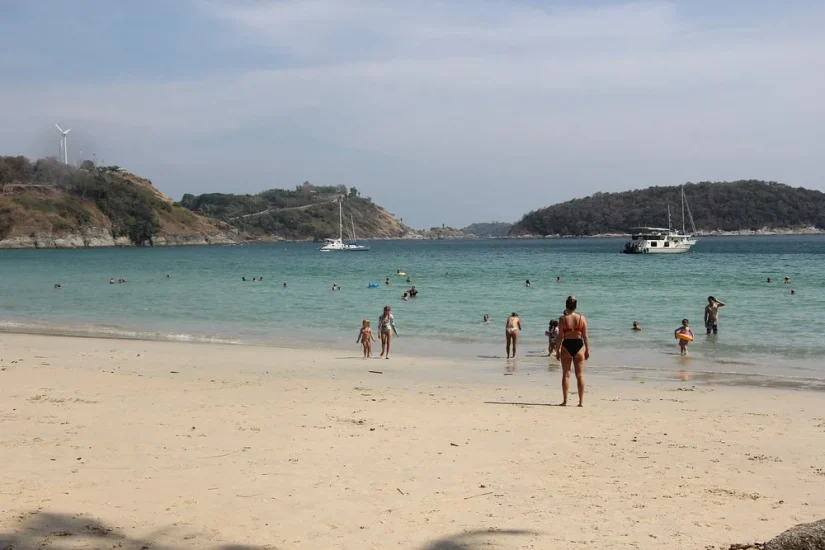
Nai Harn Beach sits in a curved bay in southern Phuket. Compared with Phuket’s larger tourism centres, the immediate beachfront has a less urban feel, which is one reason visitors often consider it when choosing between beaches in the south of the island.
The beach has a broad sandy shoreline with green hills around parts of the bay. Its setting feels quite different from highly developed beaches such as Patong, where hotels, shops and entertainment dominate much of the surrounding area.
That does not mean Nai Harn is isolated. Food, accommodation and other visitor services can be found in the wider Nai Harn and Rawai area, making it practical for anything from a short swim to spending several hours by the sea.
Space and atmosphere can change according to the season, day of the week and time of day. Visitors who prefer a quieter beach experience may find arriving earlier in the day more comfortable than relying on the busiest daytime hours.
Water Conditions and Swimming at Nai Harn Beach
Swimming conditions deserve particular attention when planning a visit to Nai Harn Beach.
Phuket faces the Andaman Sea, and conditions along its beaches are influenced by the southwest monsoon. Nai Harn can experience rough surf and strong currents during periods of unsettled weather.
This is not simply a theoretical seasonal warning. Nai Harn has previously been placed under swimming restrictions when monsoon conditions created dangerous surf. Local lifeguards have instructed swimmers to leave the water when conditions were considered unsafe.
Visitors should therefore judge the sea by the warning system on the beach, not simply by whether the weather looks sunny.
A red flag indicates that you should not enter the water in that area. Where designated swimming areas are marked by lifeguards, stay within those areas and follow their instructions. Phuket’s Tourism Authority also advises visitors to pay attention to red flags at the island’s major beaches.
Conditions can change during the same day. A calm-looking morning does not guarantee that waves and currents will remain the same later.
For travellers whose main priority is swimming, checking the conditions after arriving at the beach is more useful than relying on photographs or reviews posted on a different day.
When Is the Best Time to Visit Nai Harn Beach?
Phuket’s weather patterns have a significant influence on the experience at Nai Harn Beach.
The drier part of the year generally offers more settled conditions for a conventional Phuket beach holiday. During the southwest monsoon period, visitors should expect a greater possibility of waves, rain and swimming restrictions.
This does not mean Nai Harn cannot be visited during the wetter months. Walking along the beach, relaxing by the shore or visiting the surrounding area may still be possible. Swimming, however, should depend entirely on the conditions and warning flags present that day.
Time of day matters too.
An earlier visit can be useful if you want to avoid spending the hottest part of the day exposed to strong tropical sun. It can also give you more time to assess conditions before deciding how long to stay.
Sun protection is advisable even when there is cloud cover.
Parking, Access and Facilities
Nai Harn Beach is accessible by road from other parts of southern Phuket. Visitors commonly reach the area by car, motorbike or taxi.
If you are driving, do not assume that parking arrangements described in an old travel article or review are still current. Parking restrictions and traffic arrangements can change, particularly during busy periods. Follow local signs and avoid leaving vehicles where they obstruct traffic or access.
The wider Nai Harn area has restaurants, cafés, accommodation and other tourism services. This makes the beach relatively convenient for visitors who do not want to carry everything required for an entire day.
However, the exact availability and operating status of beach facilities can change. If a particular facility is essential to your visit, especially accessible toilets, showers or step-free access, confirm it locally before travelling.
Nai Harn Beach Prices and Practical Costs
There is no current verified price information included in this guide for parking, sunbeds or other optional beach services.
That omission is intentional. Prices in tourist destinations can change between seasons, and quoting an old rate is often less useful than giving no price at all.
If you plan to rent beach equipment, use paid parking or purchase services around Nai Harn Beach, check the displayed price before agreeing to the service.
Carrying some Thai baht in addition to electronic payment options can also be practical for small purchases.
Nai Harn Beach During Phuket’s Rainy Season
The rainy season changes how visitors should approach Nai Harn Beach.
One of the most important mistakes to avoid is assuming that blue skies automatically mean safe swimming conditions. Waves and currents are affected by conditions offshore and may remain dangerous even when it is not raining at the beach.
Nai Harn has experienced red-flag restrictions during periods of strong monsoon surf. In August 2025, for example, swimmers were ordered out of the water during a swimming ban caused by dangerous monsoon conditions.
If red flags are displayed, treat them as a swimming restriction rather than a general suggestion.
This is especially important for travellers visiting Phuket during the wetter part of the year. Build some flexibility into your plans instead of making swimming at one particular beach essential to the day.
Practical Tips for Visiting Nai Harn Beach
- Check the flags before entering the sea. Conditions at Nai Harn can change, particularly during the southwest monsoon period.
- Follow lifeguard instructions immediately. Do not enter an area marked with a red no-swimming flag.
- Consider arriving earlier in the day if you prefer a less rushed beach visit and want to avoid spending the hottest hours in direct sun.
- Bring adequate sun protection and drinking water. Tropical sun exposure can still be significant when skies are partly cloudy.
- Do not rely on old online prices for parking, beach equipment or local services. Check current charges when you arrive.
- Keep your schedule flexible during the rainy season. Rough surf may make swimming unsuitable even if visiting the beach itself remains possible.
Who Is Nai Harn Beach Best For?
Nai Harn Beach is well suited to travellers staying in southern Phuket who want a sandy beach within easy reach of Rawai and the surrounding area.
Couples and independent travellers may appreciate the bay setting and the ability to combine a beach visit with other places in southern Phuket. Families can also enjoy Nai Harn, but parents should make decisions about swimming based on the conditions and lifeguard guidance present on the day rather than assuming the water will always be calm.
Visitors primarily interested in nightlife, large shopping areas and a highly developed beachfront may find other parts of Phuket more convenient.
For swimmers, the season is particularly important. Nai Harn can provide very different experiences depending on wind, waves and monsoon conditions.
Frequently Asked Questions About Nai Harn Beach
Where is Nai Harn Beach?
Nai Harn Beach is in southern Phuket, Thailand, close to Rawai. It faces the Andaman Sea and is one of the established beaches in the southern part of the island.
Is Nai Harn Beach good for swimming?
Swimming is possible when conditions are suitable, but the answer depends on the day and season. Rough surf and dangerous currents can occur during the southwest monsoon period. Always check the flags and follow lifeguard instructions before entering the sea.
Is Nai Harn Beach suitable for families?
Families can visit Nai Harn Beach, but adults travelling with children should pay particular attention to sea conditions. A beach that looks calm in photographs may have very different conditions on the day of your visit.
Does Nai Harn Beach have lifeguards?
Lifeguards have operated at Nai Harn Beach, and local authorities have used warning flags and swimming restrictions when conditions became dangerous. Visitors should follow the instructions and designated swimming areas in place during their visit.
Can you visit Nai Harn Beach during the rainy season?
Yes, the beach itself can still be visited during the rainy season, but swimming may be restricted when waves or currents become dangerous. Check local weather conditions and beach warning flags on the day.
Is Nai Harn Beach free to visit?
This guide has not found a current official entrance fee for general beach access. Charges for parking, equipment or other optional services should be checked locally rather than relying on older online prices.
Is Nai Harn Beach Worth Adding to Your Phuket Plans?
Nai Harn Beach is a practical choice for travellers exploring southern Phuket who want a sandy bay without the heavily urbanised beachfront found in some of the island’s larger resort areas.
The main factor to plan around is the sea. During settled conditions, the beach can work well for a traditional beach day. During the southwest monsoon, swimming conditions can change quickly and restrictions may be introduced.
Arrive with a flexible plan, check the warning flags before entering the water and follow lifeguard instructions. Those simple steps are more useful than relying on a generic recommendation about whether the sea will be suitable for swimming on a particular day.
React